
Equipment & Generator Pads
The pad your equipment sits on is a spec, not a slab: anchor layout, thickness, and reinforcement built to the submittal it shipped with.
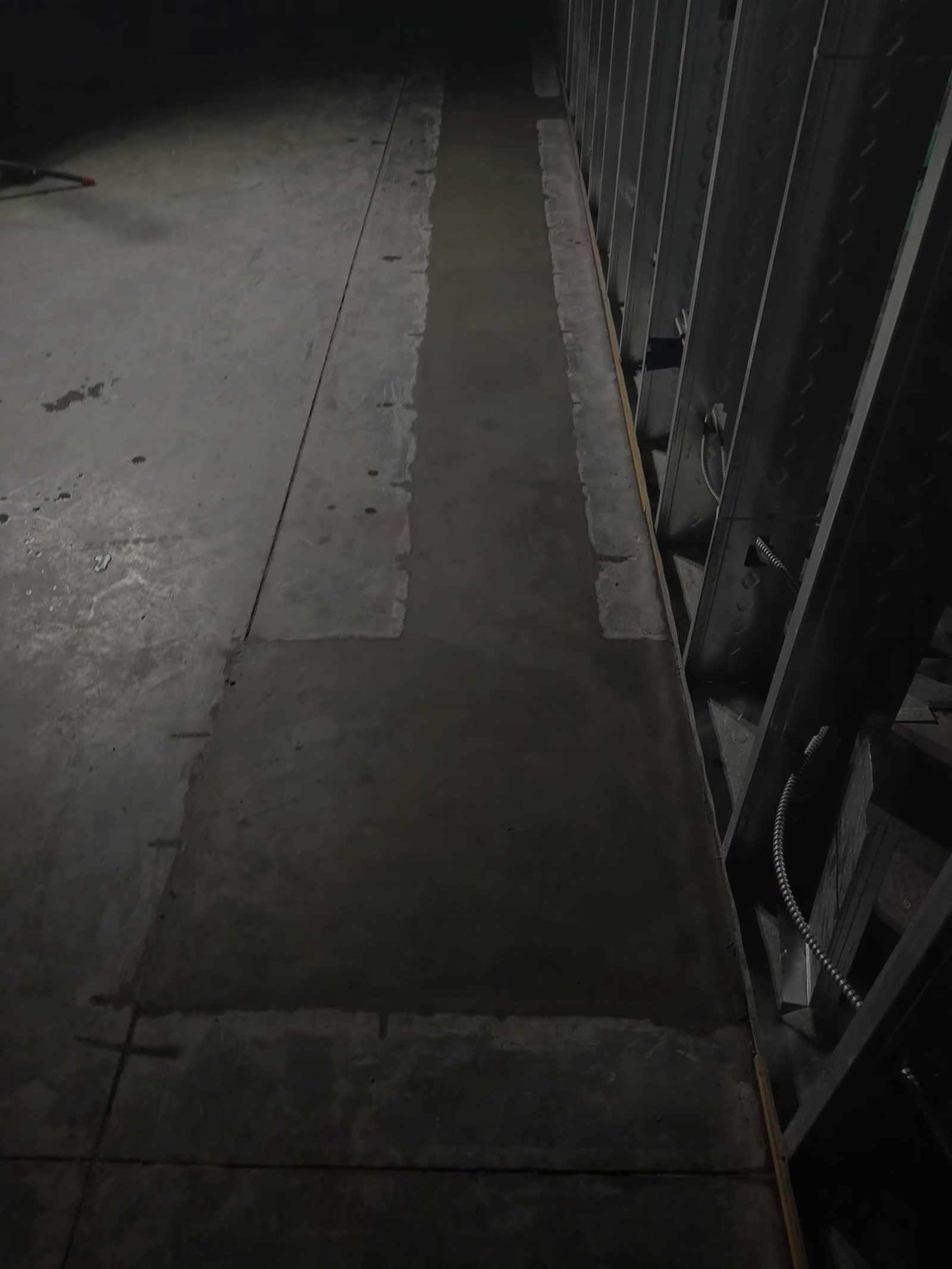
From the subgrade up
Every pour follows the same discipline: the steps a low bid skips.
Submittal & anchor layout
We build from the equipment submittal: pad dimensions, anchor bolt pattern, and conduit stub-ups located before the forms go up.
Subgrade & backfill
Compacted subgrade, and the backfill the spec names. On utility sites that is often imported limestone, not the spoil that came out of the hole.
Forms & reinforcement
Forms set to the dimension on the sheet, with the bar size, spacing, and cover the detail requires.
Pour around embeds
Concrete placed and consolidated around embeds, sleeves, and stub-ups, so the anchors land where the equipment expects them.
Trench pour-back
Where a trench feeding the pad has to be restored, we pour it back to the surrounding slab, staged around the crews still working in the ditch.
A pad poured back into an electric company's own dig
An electric company dug out the pad area and needed the pour-back managed. Generator pad specs came from the utility rather than from us, the pad ran 100 square feet, and the backfill had to be imported limestone rather than the spoil that came out of the hole. Pouring behind another crew's excavation is its own discipline: their dig sets the schedule, and the pad still has to come out to the utility's specification.
Documentation before we break ground
What procurement and facilities teams need, on file before the first truck rolls.
Certificate of Insurance
A COI naming your entity, provided before work begins.
Workers' Comp Documentation
Coverage documentation for every crew on your site.
Lien Waivers
On file before we break ground, so payment clears clean.
The teams we pour for
General contractors
Pad packages built to the submittal and coordinated with the electrical and mechanical trades.
Industrial & manufacturing
Equipment bases and trench restoration sequenced around production, not against it.
Property managers & facilities
Transformer, dumpster, and mechanical pads replaced with the site staying open.
Equipment & Generator Pads questions, answered
What spec does an equipment pad need?
It comes from the equipment, not from us. The submittal gives pad dimensions, operating weight, anchor bolt pattern, and usually a minimum thickness and strength. We build to that sheet, and flag anything on it that will not work with your site conditions before we pour.
How thick does a standby power pad have to be?
Six inches is a common floor for lighter units, and heavier equipment pushes the pad thicker with a reinforcing mat sized to the load. The controlling number is on the submittal. We do not guess a thickness for equipment that has a published one.
Do you set the anchor bolts and conduit?
We form and pour around the embeds, sleeves, and conduit stub-ups your electrician and equipment vendor locate. The anchor pattern gets checked against the submittal before the pour, because a bolt in the wrong place is a demo job, not an adjustment.
Can you pour back a utility trench?
Yes, and on a utility site it is often most of the work. We restore the trench to match the surrounding slab, dowel into what stays where the detail calls for it, and sequence around the crews still working in the ditch.
How long before equipment can be set on the pad?
Most vendors want about seven days before equipment lands, and some specs ask for a strength test before anchors are torqued. We give you the pour date up front so the delivery and the crane get scheduled behind it instead of on top of it.
Get a straight estimate
Tell us about the project. We price it after seeing the site, never a number on the phone we can't stand behind.