
Concrete Loading Docks
The apron takes trailer landing gear all day: poured thicker, reinforced heavier, and repaired one door at a time so receiving keeps running.
From the subgrade up
Every pour follows the same discipline: the steps a low bid skips.
Door-by-door walk
We walk every door and mark which aprons are failing and which are still sound, so the scope matches the damage.
Load & spec
Aprons get specced for landing gear and turning trailers, which means more thickness and heavier bar than the lot behind them.
Saw-cut sections
Repairs are cut on clean lines at the door so the pour-back keys into sound concrete instead of feathering out into it.
Grade to the door
The slab is set to door elevation and pitched to drain away from the building, so water and trailers both go the right direction.
One door at a time
We take doors in a sequence you approve, so shipping and receiving keep moving while the concrete cures.
A section repair at a commercial loading dock
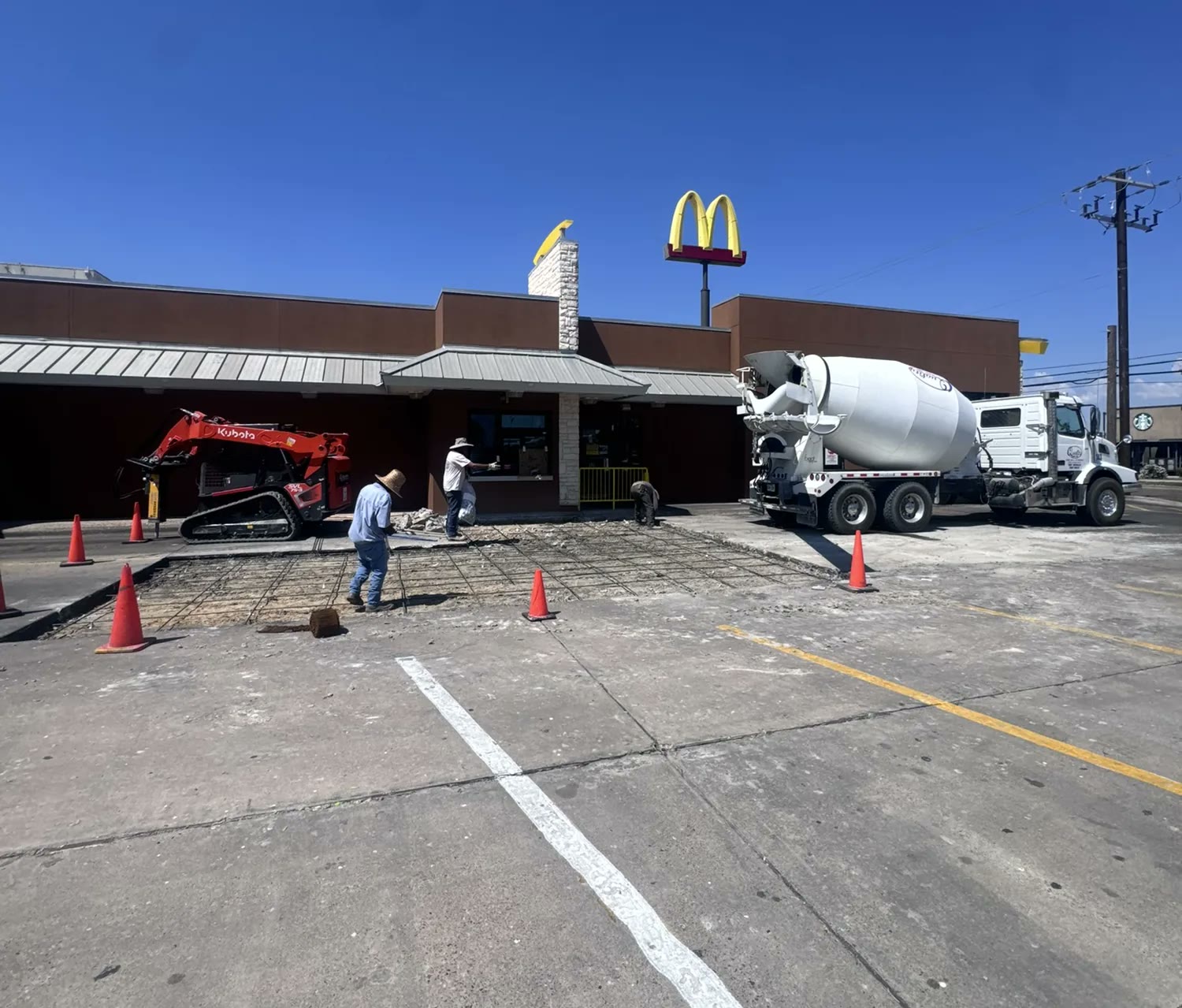
A commercial loading dock had a failed section. The scope was that section: taken out and repoured, with the sound concrete around it left alone. Section repairs get saw-cut on clean lines so the pour-back keys against a square edge instead of feathering out, and scoping to the concrete that actually failed is what keeps a dock repair from becoming a dock replacement.
Documentation before we break ground
What procurement and facilities teams need, on file before the first truck rolls.
Certificate of Insurance
A COI naming your entity, provided before work begins.
Workers' Comp Documentation
Coverage documentation for every crew on your site.
Lien Waivers
On file before we break ground, so payment clears clean.
The teams we pour for
Warehouse & distribution
Aprons and approach slabs repaired door by door so receiving keeps running.
Industrial & manufacturing
Dock and truck-court work sequenced around your shipping schedule.
General contractors
Dock pads and approach slabs poured to the structural detail and the door elevation.
Loading Docks questions, answered
How thick should a dock apron be?
Thicker than the lot behind it. An apron takes trailer landing gear as a point load in nearly the same spot every time, so 8 inches with a heavier bar mat is a common starting point where the drive lane runs 6. We spec against your trailer traffic, not a default.
Why does the concrete at our dock doors keep failing?
Landing gear concentrates a loaded trailer onto two small pads, and it lands in the same footprint over and over. If the apron was poured at lot thickness on a base that was never built for it, that spot goes first. The repair has to address the base as well as the panel or the same square foot returns.
Can you repair one door instead of the whole apron?
Yes, and usually you should. We saw-cut the failed section on clean lines, replace it, and leave sound concrete alone. You get the door back instead of paying for apron that had nothing wrong with it.
How long is a dock door out of service?
Plan on about a week per door: demo and prep, the pour, then the cure before trailers come back on it. We sequence door by door so you never lose the whole dock at once.
Do you handle the approach slab and truck court too?
Yes. Apron, approach slab, and truck-court tie-ins get scoped together, because the joint between them is exactly where the next failure starts when two contractors each pour half of it.
Get a straight estimate
Tell us about the project. We price it after seeing the site, never a number on the phone we can't stand behind.