
Bollards & Wheel Stops
Protection that holds when a vehicle finds it: footings sized to the detail, posts set plumb and filled, and a finish that keeps them visible.
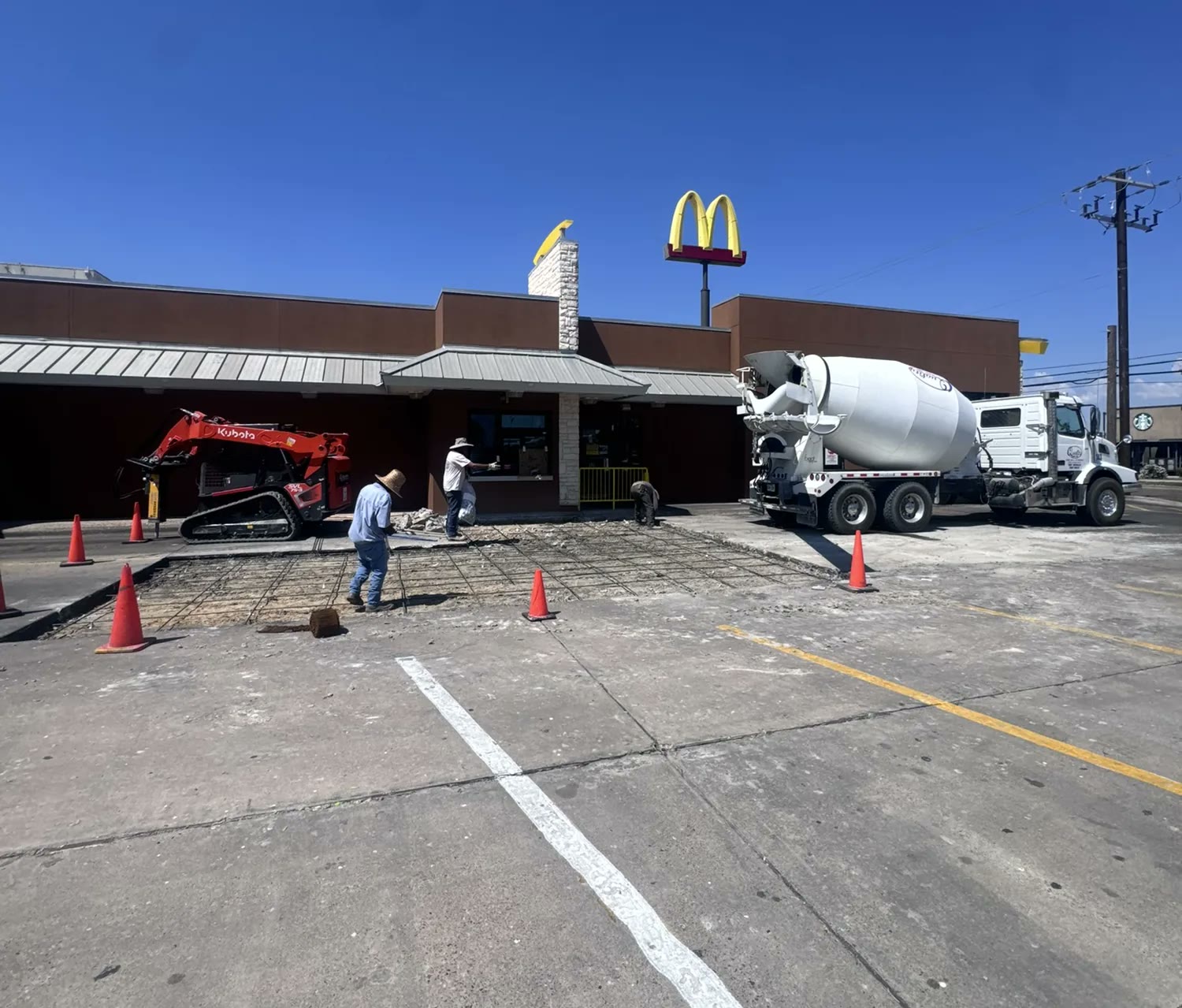
From the subgrade up
Every pour follows the same discipline: the steps a low bid skips.
Layout & utility check
We set the layout against your plan sheet and locate what is underground before anything gets cored or dug.
Footing depth
Footings are dug to the depth and diameter the detail names, because the concrete below grade is what actually stops the vehicle.
Set plumb & fill
Posts go in plumb and braced, then get filled, and the footing is poured and consolidated so no voids are left around the pipe.
Finish & visibility
Primed and painted, with a reflective band where the detail asks for one and a domed top so water sheds instead of standing.
Wheel stops & handoff
Wheel stops are pinned on layout, and you get the count and locations as built for your file.
Dumpster enclosure bollards, built to the detail sheet
A dumpster enclosure needed protection and a fence line, taken straight off the plan detail: two 4-inch bollards on 3-foot-deep, 18-inch-wide footings in 3,000 PSI concrete, primed and painted yellow, with a 6-inch reflective band and a concrete dome on top so water sheds. Ten fence-post footings at 3.5 feet deep went in on the same trip.
Documentation before we break ground
What procurement and facilities teams need, on file before the first truck rolls.
Certificate of Insurance
A COI naming your entity, provided before work begins.
Workers' Comp Documentation
Coverage documentation for every crew on your site.
Lien Waivers
On file before we break ground, so payment clears clean.
The teams we pour for
Retail & hospitality owners
Storefront and drive-through protection set where the vehicle actually goes, not where the stripe is.
Property managers & facilities
Enclosures, meters, and equipment protected across a portfolio on one work order.
General contractors
Bollard and footing packages built to the plan detail, with the count and locations documented.
Bollards & Wheel Stops questions, answered
How deep does a bollard footing need to be?
Deep enough that the soil, not the pipe, takes the hit. Details commonly call for three feet or more of footing under a bollard standing three to four feet above grade, and the diameter matters as much as the depth. We build to the detail on your sheet, and where there is no sheet we size it to what the bollard is protecting.
Concrete-filled or hollow pipe?
Filled. A hollow post bends and stays bent, and by the time you see the dent the footing has usually moved too. Filling stiffens the pipe so the footing can do its job, which is why nearly every detail we build calls for it.
Do you install removable bollards?
Yes. Removable posts sit in a cast sleeve so they lift out for fire lane access, deliveries, or events and drop back in without a crew. The sleeve has to be set at the right elevation the first time, so it goes in with the pour rather than after it.
Bollards or wheel stops for storefront protection?
A wheel stop keeps a car from rolling into the walk at parking speed. It does not stop a vehicle that hits the gas. Where there is glass, a door, a meter, or equipment behind the stall, that is a bollard line. Most storefronts end up with both.
How long does bollard installation take?
A run is usually a one to two day job: dig or core and set, then pour and finish behind it. The footings have to cure before anything leans on them, so paint and reopen get scheduled a few days out.
Get a straight estimate
Tell us about the project. We price it after seeing the site, never a number on the phone we can't stand behind.